
Disclosure: Kangglow may earn a commission when readers book through links on this page. Service availability, accepted items, appointment times, and prices vary by location and job. Confirm the current terms and final onsite quote before authorizing removal. View our full Affiliate Disclosure.
1-800-GOT-JUNK? is a legitimate full-service junk removal company, but deciding whether it is the right service is mostly a question of convenience versus cost. The crew comes to the property, looks at the items, gives a price, and handles the lifting, loading, basic cleanup, and disposal or recycling. That is different from renting a dumpster or hauling everything to a transfer station yourself.
The tradeoff is that a firm final price often requires an onsite look. If you need the lowest possible removal cost and can do the labor, a municipal bulk-pickup program, donation pickup, or self-haul option may be cheaper. If the difficult part is moving a sofa down a staircase, clearing a garage before closing, or getting an office usable again without assigning employees to the job, full service can be worth paying for.
The short answer
- It is a real, established service. The company operates in many metropolitan areas, though coverage is not universal.
- The estimate is free and carries no obligation. The crew inspects the load and presents the price before work begins.
- Most multi-item jobs are priced by truck volume. A single item may receive an individual price based on its size.
- The quoted service is full-service. It generally includes removal from the item’s location, loading, sweeping the cleared area, and applicable disposal or recycling fees.
- Not everything is accepted. Hazardous materials and certain regulated items require another disposal route or advance confirmation.
How the service works
The basic process is deliberately simple. You schedule an in-person estimate online or by phone and provide the service address. On the appointment day, the company says its uniformed truck team will call or text roughly 15 to 30 minutes before arrival. The crew then examines what needs to go and gives a no-obligation price.
Nothing should be loaded until you approve that price. If you agree, the team can normally remove the items during the same visit. If you decline, the onsite estimate itself does not obligate you to proceed. That approval point matters because the final quote may differ from whatever number you had in mind before the crew saw the load, the access route, and the local disposal conditions.
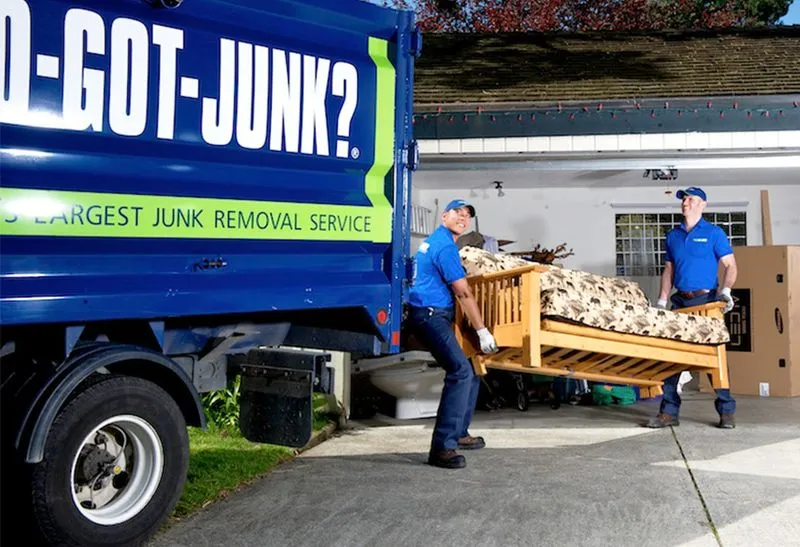
This model works best when the scope is visible and reasonably organized. You do not need to drag everything to the curb, but you should know what is staying and what is leaving. Mark questionable items, open access to basements or storage rooms, and make sure the person at the property has authority to approve the quote.
How 1-800-GOT-JUNK? pricing works
There is no useful nationwide flat price for a typical pickup. For two or more items, the company generally prices by volume: how much space the load takes in the truck. Charges can range from a minimum-load price to a full truckload. For one item, the service may use a single-item price, with a larger object generally costing more than a smaller one.
The final amount can also vary by city. Labor, disposal fees, recycling options, and local operating costs are not identical from one market to another. The official FAQ says an estimated price may sometimes be available before the appointment, but the final price is provided onsite.
What the price is meant to include
According to the company’s U.S. FAQ, the quoted full-service price includes collecting items from where they are located, loading them into the truck, sweeping the cleared area, and associated disposal or recycling fees. That is the important comparison point when looking at a dumpster price or a lower-cost hauler. A cheaper headline number is not necessarily cheaper if it leaves you responsible for carrying, loading, permits, fuel, or disposal.
Questions to ask before approving the quote
- Is this the complete price for everything I have shown you?
- Does it include removal from every room or floor involved?
- Are disposal and recycling charges included?
- Are any items excluded or subject to special handling?
- If the load turns out to be larger, when will I be told about a price change?
Get the scope settled before the first item enters the truck. A rushed estimate becomes much harder to evaluate once the room is half empty.
What the crew can take
The company describes its general rule as taking almost anything that is non-hazardous and can be lifted by two team members. Its U.S. examples include furniture, mattresses, appliances, televisions, computers and other electronics, exercise equipment, household clutter, tires and rubber, and many renovation-related items.
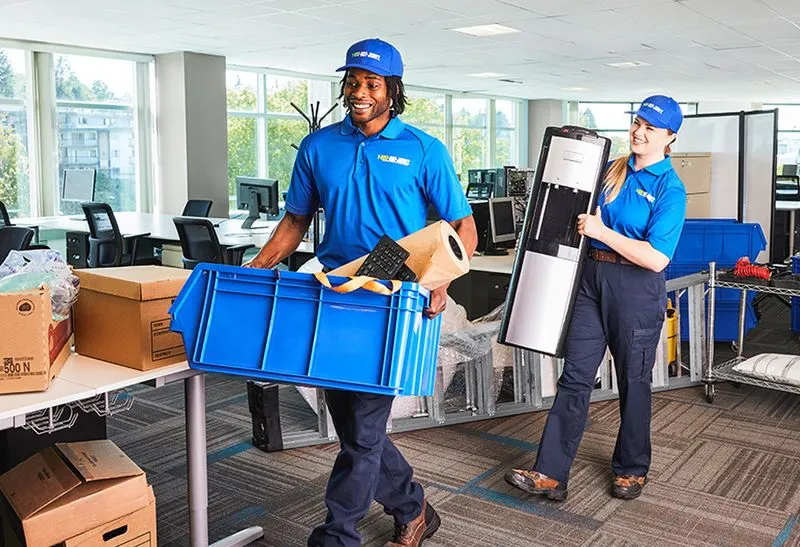
That broad list does not make every item automatically acceptable in every location. Local rules matter, especially for refrigerants, electronics, tires, paint, and renovation debris. Paint is a good example: the company says some locations can accept it, while others cannot, and locations that do may require it to be fully dried.
Items the company says it generally does not take
- Chemicals, solvents, and oils
- Asbestos
- Storage and oil drums unless they meet stated preparation requirements
- Oil and waste storage tanks
- Other toxic or hazardous materials
Do not hide or relabel a questionable material to get it onto the truck. Send a photo or call ahead, describe the item accurately, and ask whether the local team can accept it. Your city or county household hazardous-waste program is often the correct destination for chemicals and similar materials.
Is 1-800-GOT-JUNK? reliable?
The service model has several practical safeguards: a scheduled arrival window, advance call or text, uniformed teams, an onsite quote, and the ability to decline before removal begins. Those features make the process easier to evaluate than hiring an unidentified hauler from a classified listing.
Reliability still depends on the local operation and the specifics of the appointment. Coverage, available times, crew experience, and disposal options can vary. Read recent reviews for the location serving your ZIP code rather than relying only on a national average. Pay particular attention to comments about arrival communication, adherence to the quote, care inside the property, and how the crew handled difficult access.
For apartments, condominiums, offices, and managed properties, reliability also depends on preparation. Reserve an elevator if required, confirm loading-zone rules, obtain building permission, and tell the service about stairs or restricted access when booking. A crew cannot solve a locked freight elevator or a loading area that requires a permit.
When the service is a good fit
- A move or estate cleanout has a hard deadline. Speed and labor matter more than sorting every item into the cheapest disposal channel.
- Large objects are still inside. You need a crew to move a sofa, mattress, appliance, or bulky furniture from its current location.
- The load is mixed. Furniture, boxes, household objects, and non-hazardous debris need to leave in one visit.
- You cannot safely do the lifting. Stairs, weight, awkward dimensions, or limited help make self-hauling impractical.
- A business needs minimal disruption. An office or commercial space must be cleared without pulling staff away from their work.
When another option may be better
A municipal bulk collection may be the first call when you have one eligible curbside item and plenty of time. Donation pickup can make more sense for clean, usable furniture, although acceptance standards and scheduling vary. A dumpster is often better for a renovation that will produce debris over several days. Self-hauling may be economical when you own a suitable vehicle, have help, and know the disposal rules.
Full-service removal is also a poor fit for hazardous waste. Those materials need an approved facility or local collection program, not a general junk truck.
How to prepare for the appointment
- Make one complete inventory. Check closets, the garage, attic, basement, and outdoor areas before the crew arrives.
- Separate donations and personal records. Do not leave important documents or usable items in an ambiguous pile.
- Photograph the load. Images help when asking questions before the appointment and provide a simple record of scope.
- Identify restricted materials. Ask about paint, tires, appliances with refrigerants, electronics, and renovation debris in advance.
- Clear access. Move vehicles, unlock gates, protect floors if necessary, and arrange building access.
- Be present for the estimate. Confirm the items and total price before authorizing removal.
- Check the cleared space. Look through rooms, drawers, and the loading area before the truck leaves.
The bottom line
1-800-GOT-JUNK? is a credible option when you want the labor and logistics handled in one visit. Its value is not a guaranteed bargain price; it is the combination of an onsite quote, indoor removal, loading, cleanup, and disposal coordination. The service is easiest to justify for bulky items, deadline-driven cleanouts, difficult access, or situations where self-hauling is unrealistic.
Book the estimate with a complete inventory, disclose unusual items, and compare the final quote with alternatives that provide the same level of labor. If the price works, approve it. If it does not, the estimate is designed to let you decline before the work starts.